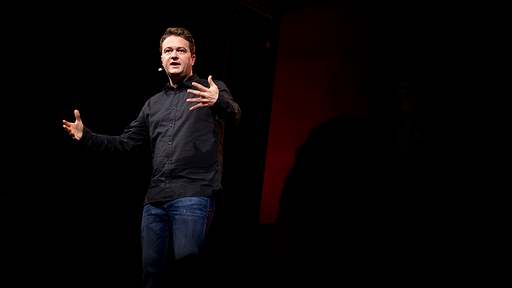
Photo Credits: Ted Talk
If the following quotes don’t persuade you to read Johann Hari’s Stolen Focus: Why You Can’t Pay Attention, I hope your (s’cuse me, don’t mean to be rude) shrinking attention span becomes the reason for your to pick up this book and actually read it.
Don’t come at me, I’m having the same problems you’re having: our complete inability to focus on one thing at one time. It is becoming seemingly impossible, not just for adults but for the kids of this generation. If you look at their attention spans, it is even worse for them as they were literally born with a phone in their hands. By the time children turn two in this day and age, their phone dexterity is already present. By the time their in primary school, they are well-versed with using their phones/computers to help them with their homework. While most teachers agree technology helps in the classroom, others are averse, or at the very least wary about allowing kids to use their phones in the classroom.
But, I digress. Read the quotes and get your hands on this book, stat.
Also, a note about Johann Hari: he may be a controversial figure, but the man can write. All his books are non-fiction but they read like psychological thrillers. You just can’t stop reading. Man’s got a gift — check out some of his most memorable quotes from this book below:

Photo Credits: Iceland Travel
“One afternoon, I sat in the Blue Lagoon in Iceland, a vast and infinitely calm lake of geothermal water that bubbles up at the temperature of a hot bathtub even as snow falls all around you. As I watched the falling snowflakes gently dissolve into the rising steam, I realised I was surrounded by people wielding selfie sticks. They had put their phones intro waterproof casings, and they were frantically posing and posting. Several of them were live-streaming to Instagram. I wondered if the motto for our era should be: I tried to live, but I got distracted. This thought was interrupted by a ripped German, who looked like an influencer, bellowing into his camera phone: “Here I am in the Blue Lagoon, living my best life!” Hari, J. 2022
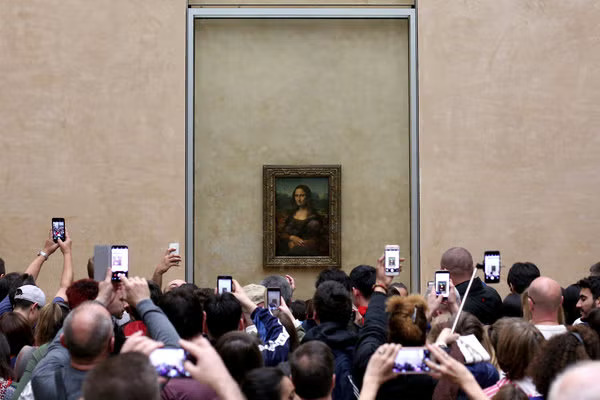
Photo Credits: The New York Times
“Another time, I went to see the Mona Lisa in Paris, only to find she is now permanently hidden behind a rugby scrum of people from everywhere on earth, all jostling their way to the front, only for them to immediately turn their backs on her, snap a selfie, and fight their way out again. On the day I was there, I watched the crowd from the side for more than an hour. Nobody – not one person – looked at the Mona Lisa for more than a few seconds. Her smile no longer seems like an enigma. It appears as though she is looking at us from her perch in sixteenth-century Italy and asking us: Why won’t you just look at me like you used to? Hari, J. 2022
“My normal mode of consuming news, I realised, induced panic, this new style (reading only one newspaper and nothing else) induced perspective.” Hari, J. 2022
“It’s always tempting to confuse your personal decline for the decline of the human species.” – Hari, J. (2022)
“The British writer Robert Colville says we are living through ‘the Great Acceleration’, and he argues it’s not simply our tech that’s getting faster – it’s almost everything. There’s evidence that a broad range of important factors in our lives really are speeding up” people talk significantly faster now that they did in the 1950s, and in just twenty years, people have started to walk 10 percent faster in cities.
Usually, this acceleration is sold to us in a spirit of celebration – the original Blackberry advertising slogan was ‘anything worth doing is worth doing faster.’ Internally, at Google, their unofficial motto among the staff is ‘if you’re not fast, you’re fucked.'” Hari, J. 2022
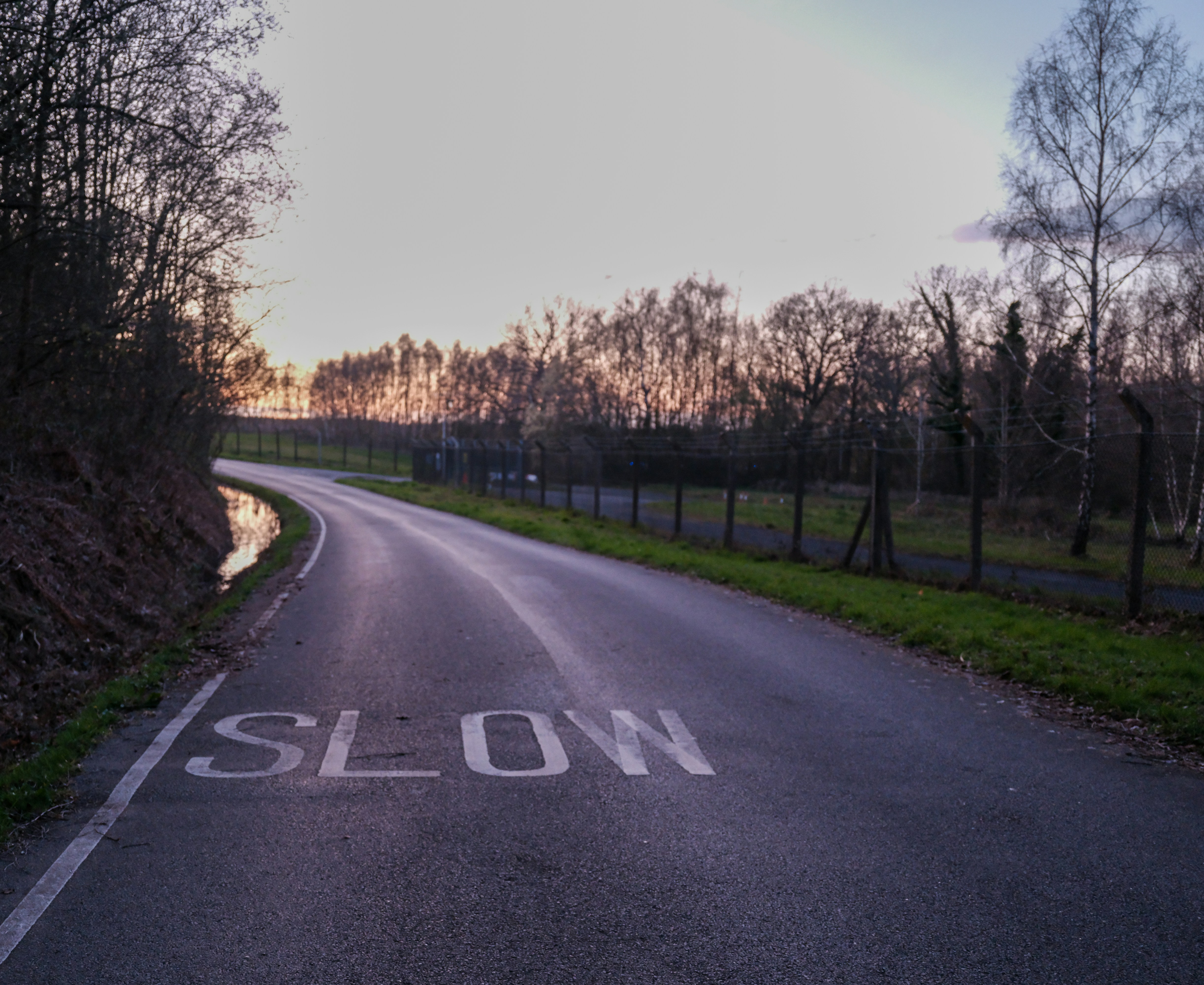
“Slowness nurtures attention, and speed shatters it.” – Claxton, G. Professor of Learning Sciences, University of Winchester.
“One way of thinking about this,” Professor Sune Lehmann who works in the Department of Applied Mathematics & Computer Science at the Technical University of Denmark, said, “is that at the moment, it is like we’re ‘drinking from a fire-hose — there’s too much coming at us.’ We are soaked in information. The raw figures on this have been analysed by two other scientists, Dr Martin Hilbert at the University of Southern California and Dr Priscilla Lopez at the Open University of Catalonia. Picture reading an eighty-five-page newspaper. In 1986, if you added up all the information being blasted at the average human being – TV, radio, reading – it amounted to forty newspapers-worth of information every day. By 2007, they found it had risen to the equivalent of 174 newspapers per day. The increase in the volume of information is what creates the sensation of the world speeding up.”
But we told ourselves we could have a massive expansion in the amount of information we are exposed to, and the speed which it hits us, with no costs. This is a delusion. ‘It becomes exhausting.’
“More importantly, Lehmann said, ‘What we are sacrificing is depth in all sorts of dimensions…Depth takes time. And depth takes reflection. If you have to keep up with everything and send emails all the time, there’s no time to reach depth. Depth connected to your work in relationships also takes time. It takes energy. It takes long timespans. And it takes commitment. It takes attention, right? All of these things that require depth are suffering. It’s pulling us more and more up onto the surface.’
There was a phrase in Lehmann’s scientific paper, summarising his findings, that kept rattling around in my head. It said that we are collectively, experiencing ‘a more rapid exhaustion of attention resources.'” Hari, J. 2022
I may come back and add more quotes but I think these few are enough to pique your interest for now. I was first introduced to Johann Hari when I bought his first book: Chasing the Scream: The First and Last Days of the War on Drugs. That too read like a thriller, and I was fully engrossed. If time permits, I will review that book in the coming future. For now, go get his latest: Stolen Focus: Why You Can’t Pay Attention. You can thank me later 🙂
Sources:
- J, Hari (2022) Stolen Focus: Why You Can’t Pay Attention
- Common Sense Media (2025) Digital Childhood Starts at Age Two: Landmark Study Shows Evolution of Young Children’s Media Use https://about.commonsensemedia.org/press-room/press-releases/digital-childhood-starts-at-age-two-landmark-study-shows-evolution-of-young-childrens-media-use

